

Hydroponic Strawberry Growth with Sawdust, Coco Soil, and Pumice
September 24, 2024
This study evaluated how different organic substrates—100% pumice, sawdust, coco soil, and their mixtures—affect hydroponically grown strawberries. Results showed coco soil significantly improved early leaf growth and photosynthesis due to better moisture retention and CO₂ regulation, while pumice enhanced fruit production through superior drainage. Sawdust was cost-effective but worked best when mixed with other substrates. Overall, coco soil and mixed substrates promoted healthier plants and higher yields, suggesting sustainable alternatives for hydroponic fruit cultivation in resource-limited environments.
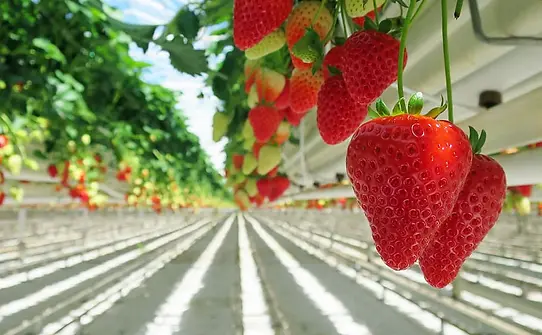
Growing plants hydroponically has benefits to the health of plants including pest control, moisture regulation, yield production, and nutrient control. The researchers analyzed the growth of strawberry plants using six subtraits: 100% pumice, 100% sawdust, 100% coco soil, and three mixtures of these substrates. They aimed to determine which organic substrates would have the best production of strawberries and hypothesized that a mix of the materials would improve the plant’s moisture control, drainage, and nutrients. By understanding the effects of these substrates, the researchers aim to find new ways to improve hydroponically grown strawberries.
Figure one shows the effects of different substrates receiving different levels of nutrients. Researchers wanted to see which blend of organic mixtures will provide the most abundant number of leaf production. In figure 1, the independent variables were the substrates, while the dependent variables were the number of leaves over the weeks. Coc-100 had the highest number of leaves by week 6 due to its ability to maintain adequate moisture control while sawdust compacted quickly due to the insufficient draining. The researchers found that the leaves grown in Saw-100 increased by 50%, however, when grown in Pum-100, the leaves increased 34%.
Figure two shows the development of the stolon from weeks 2-8, then the fruit production from weeks 8-12. The researchers monitored each plant across each substrate - the independent variables while the number of stolons and fruits being produced were the dependent variables. Coc-100 had the highest stolon yield during the early part of the experiment. During the fruit production phase, Pum-100 produced the most fruit as opposed to any of the substrates mixed with coco soil. Mixed substrates had similar overall results since they each combined their benefits to regulate the plant’s overall performance. Coco soil enhanced the growth and moisture control during the early stages, while pumice promoted drainage and fruit production. Sawdust was cost effective to use, but was best used with other substrates to maintain balance.
There were three key components in observing the plants over the course of the experiment: photosynthetic rate, stomatal conductance, and Intercellular CO₂ Concentration. The Coc-100 had the highest photosynthetic rate indicating that it was able to convert light into energy fairly well as opposed to Pum-100. Coc-100 also had the highest levels of stomatal conductance which showed that it was about to regulate CO₂ more efficiently. Coc-100 and mixed substrates had the best results which reflected that mixtures that had coco soil absorbed more CO₂ for the production of photosynthesis. Coco soil and its mixtures had the optimal ingredients for better leaf function, indicating that it supported hydroponic plant growth.
The three figures showed a drastic impact on the plants in various ways. Figure 1 shows the effect of different substrate medium on the leaf number; figure 2 shows the effect of different substrate medium on the stolen fruit; and figure 3 shows the effect of different substrate medium on leaf photosynthetic grown strawberries. The researchers found that plants grown in coco soil and mixed substrates produced healthier strawberries due to moisture control and nutrient regulation. This substrate enhanced stolon growth and leaf production. The findings suggest that alternative methods of growing fruits and plants in areas with scarce resources might be feasibly done hydroponically using coco soil.
Marinou, E., Chrysargyris, A., & Tzortzakis, N. (2013). Use of sawdust, coco soil and pumice in
hydroponically grown strawberry. Plant Soil Environ, 59(10), 452-459. 10.17221/297/2013-PSE